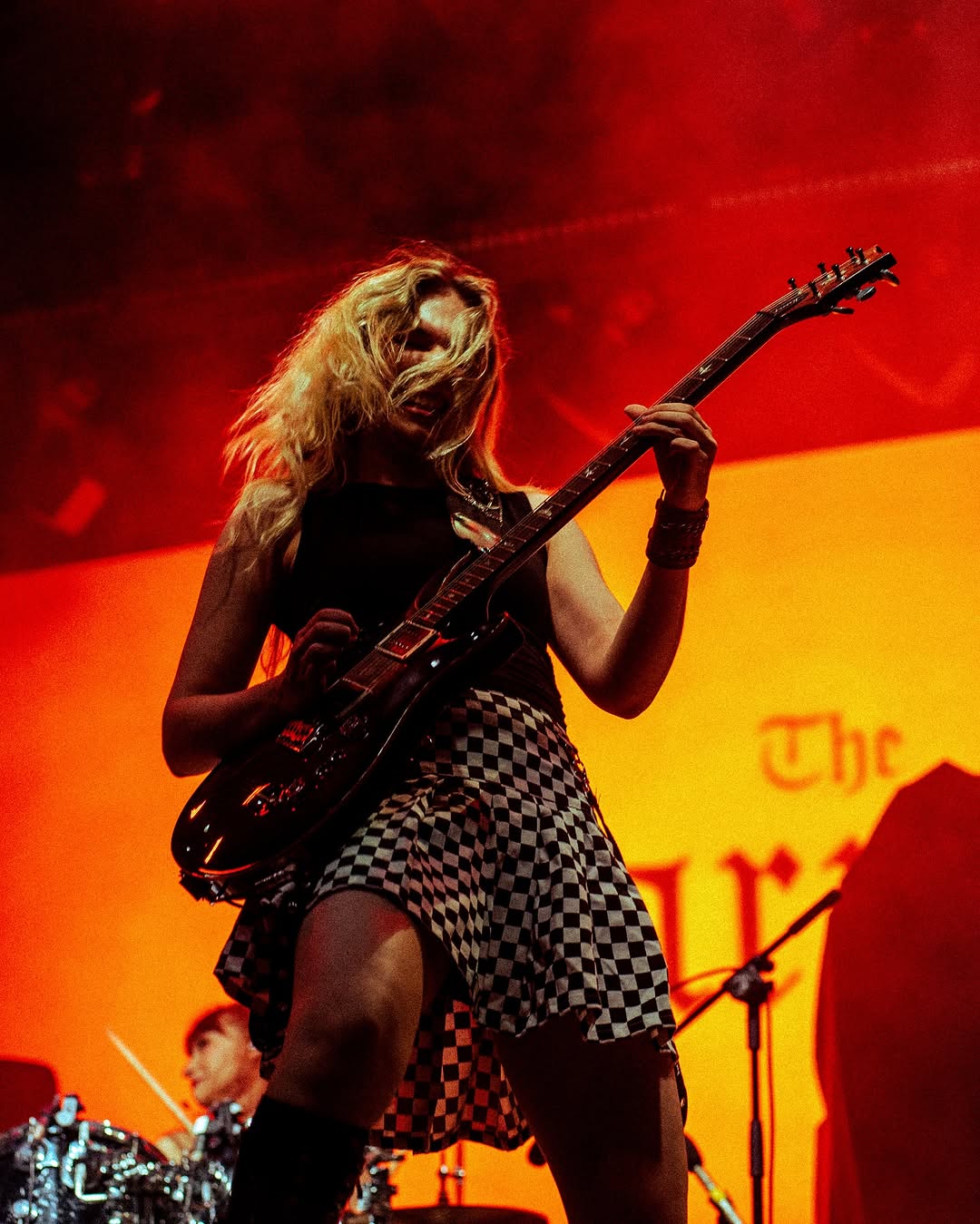
Experience The Warning’s historic Brazilian debut through the explosive shows in São Paulo, Curitiba, and Porto Alegre that cemented their status as Latin America’s rock powerhouse.
The Warning’s Brazilian Odyssey: When Mexican Rock Met South American Thunder
nother tour stop—it was a seismic cultural event a decade in the making. After years of building a global fanbase, the Monterrey-born Villarreal sisters—Daniela, Paulina, and Alejandra—finally answered the passionate rallying cry of Brazilian fans who had flooded their social media with “Come to Brazil!” pleas since their viral breakthrough.
Over three electrifying nights in March 2025, São Paulo, Curitiba, and Porto Alegre became epicenters of a cross-cultural rock explosion. Language barriers crumbled beneath blistering guitar solos, thunderous drumming, and the universal language of raw, authentic rock. For both band and fans, these performances transcended music to become something more profound: a celebration of Latin American rock’s borderless future.
The Warning Finally Plants Their Flag in Brazil: A Decade in the Making
For Brazilian rock enthusiasts, The Warning’s debut on South American soil represented much more than a concert—it was the culmination of a passionate, decade-long courtship between a band and a nation known for its fervent music culture. Since their viral 2014 cover of Metallica’s Enter Sandman catapulted three young sisters from Monterrey into the international spotlight, Brazilian fans had been among the most vocal advocates for the band, turning “Come to Brazil!” from a music meme into a legitimate movement.
The band’s signing with Lava/Republic Records in 2020 and subsequent global tours only intensified this anticipation. As their discography evolved—particularly with 2024’s critically acclaimed Keep Me Fed—their exploration of themes like generational angst, resilience, and authentic self-expression found fertile ground in Brazil’s youth-driven rock scene, where similar social currents run deep.
“We’ve seen the comments, the tweets, the Instagram posts for years,” Paulina told 89 A Radio Rock São Paulo in a pre-tour interview that sent ripples through Brazilian social media. “We’re Mexicans—we know the passion Latin Americans bring. But Brazil? You’re legendary for turning concerts into revolutions.” Daniela added with evident emotion, “This isn’t just a tour stop; it’s a homecoming we’ve dreamed of since we were kids covering Muse in our garage.”
The strategic decision to include Brazil as a cornerstone of their 2025 Latin American tour—preceded only by their historic sold-out shows in Mexico—signaled something deeper than mere tour routing. It represented The Warning’s conscious embrace of their hemispheric identity, positioning themselves as musical ambassadors bridging North and South America through the universal language of rock.
Local music journalists noted the significance of a female-fronted Mexican rock band commanding stages traditionally dominated by North American and European acts. As cultural critic Paulo Monteiro wrote in Folha de São Paulo: “The Warning’s arrival marks a paradigm shift—proof that Latin American rock doesn’t need translation or cultural concessions to resonate globally. These three sisters from Monterrey speak the international language of power chords and protest, and Brazil was ready to answer their call.”
Cities, Venues, and the Anatomy of a Brazilian Rock Frenzy
The Warning’s Brazilian conquest unfolded across three strategic locations, each venue offering a distinct canvas for the band’s explosive performances and the fans’ unbridled enthusiasm.
São Paulo: Allianz Parque (March 8, 2025)
The Brazilian odyssey began at São Paulo’s imposing Allianz Parque, a 55,000-capacity stadium typically reserved for football matches and A-list international acts. Though billed as support for punk-rock veterans The Offspring and Rise Against, The Warning’s afternoon set became what local newspaper Estado de São Paulo called “the day’s true headliner by audience reaction.”
Despite the challenge of a 45-minute slot and daylight conditions that limited their production value, the sisters delivered a concentrated blast of energy that sent shockwaves through the massive venue. Security personnel later reported managing over 200 crowd-surfers during Qué Más Quieres, a Spanish-language track that became an unlikely sing-along anthem as thousands of Portuguese-speaking fans embraced every word.
“We didn’t expect to see mosh pits forming during an afternoon set,” venue coordinator Marcelo Alves told Rock Brigade magazine. “When they played S!CK and CHOKE, we had to bring in additional security teams. The connection was instantaneous.”
Curitiba: Pedreira Paulo Leminski (March 9, 2025)
The true test of Brazilian devotion came the following night at Curitiba’s Pedreira Paulo Leminski. This legendary open-air quarry-turned-venue, known for its unique acoustics and dramatic setting, witnessed perhaps the tour’s most visually spectacular moment as a sudden downpour transformed The Warning’s headlining show into what fans quickly dubbed “The Waterning.”
Weather forecasts had predicted storms, but the 30,000 fans who packed the venue refused to surrender their spots, creating a sea of improvised rain gear and defiant smiles. As thunder literally accompanied Pau’s drum intro on opener MONEY, the band embraced the elemental chaos, with Dany raising her PRS guitar skyward as lightning flashed behind the stage.
“The rain wasn’t a deterrent—it became part of the show,” explained local fan Carolina Mendes, who traveled six hours for the concert. “When everyone started chanting ‘Olé, olé, olé, Warning!’ between songs, you could feel this collective energy that transcended the weather.”
Setlist.fm data reveals an epic 22-song performance spanning their entire catalog, including rarities like XXI Century Blood and a breathtaking piano-accompanied rendition of Animosity that silenced even the most raucous sections of the crowd.
Porto Alegre: Pepsi On Stage (March 11, 2025)
The Brazilian leg concluded at Porto Alegre’s more intimate Pepsi On Stage venue, where 5,000 lucky fans experienced The Warning in a club-like atmosphere that amplified every note and crowd response. This final show became a playground for experimentation, featuring Ale’s extended bass solo during Dust to Dust and an impromptu drumming duel between Pau and local percussion collective Baticoral that had the crowd erupting in rhythmic appreciation.
Fan videos captured the sisters’ deliberate efforts to connect linguistically with their Portuguese-speaking audience. Dany’s mid-set cry of “Vocês são incríveis!” (“You’re amazing!”) prompted such a deafening response that the band had to pause for nearly a minute before continuing.
“The smaller venue created this pressure-cooker effect,” noted music critic Roberto Almeida. “The energy had nowhere to dissipate, so it just kept building. By the encore, you could feel the floor physically vibrating with the collective jumping.”
Crowd Energy Index (scale 1–10):
- São Paulo: 8.5 (daytime slot tempered intensity, but massive scale compensated)
- Curitiba: 9.8 (rain-enhanced fervor created a once-in-a-lifetime atmosphere)
- Porto Alegre: 9.5 (intimate venue maximized decibels and created unparalleled connection)
As drum tech Miguel Sánchez later remarked on the band’s podcast: “We’ve toured four continents, but Brazil showed us something new—how to measure crowd volume in geological terms.”
Setlist Archaeology: Decoding the Brazilian Chapter
The Warning’s approach to their Brazilian setlists revealed a band that had done their cultural homework, strategically designing each show to honor the country’s rich musical heritage while delivering the high-octane rock experience their fans craved. While core tracks from Keep Me Fed anchored each performance, the sisters crafted unique moments that transformed standard tour stops into unforgettable cultural exchanges.
Curitiba: Rain-Soaked Vulnerability
The rain-drenched Curitiba show pushed the band toward more introspective territory. Midway through their set, as the downpour briefly intensified, the sisters huddled under a single spotlight for the first-ever live performance of Hurt—their haunting 2024 collaboration with Dead Poet Society. Stripped down to a minimalist acoustic arrangement, the song’s exploration of emotional isolation took on new meaning as 30,000 drenched fans held up phone lights, creating a constellation of light against the stormy backdrop.
Technical challenges added unplanned drama to the performance. Fan-recorded footage captured Dany’s guitar tech racing onstage during ERROR‘s frenetic outro after she snapped two strings on her Gibson SG—a moment Pau later referenced on Instagram with characteristic humor: “Dany’s guitar couldn’t handle Brazil’s voltage! Even our instruments weren’t prepared for how hard this country rocks.”
Porto Alegre: Bass-Driven Innovation
The intimate Porto Alegre show allowed for the tour’s most experimental moments, particularly during an extended jam where Ale took center stage. Her bass solo during Dust to Dust unexpectedly incorporated elements of Brazilian funk carioca, with slapped rhythms that nodded to the country’s unique bass-heavy dance music tradition.
“That wasn’t planned,” Ale admitted during a post-show meet-and-greet. “I’ve been listening to so much Brazilian music on this tour, and it just came out naturally. The way the crowd responded—like they immediately recognized what I was doing—that’s when I realized how musically sophisticated Brazilian audiences are.”
Setlist Statistics & Highlights
- Most performed song: MONEY (all three shows, always in opening trio)
- Brazilian debut performances: 4 songs (Hurt, The One, S!CK [Extended Version], Cuéntame)
- Average set length: 105 minutes (25 minutes longer than typical Keep Me Fed tour stops)
- Most audience participation: Qué Más Quieres in São Paulo, where the predominantly Portuguese-speaking crowd sang every Spanish lyric with precision
- Deepest cut: Escape from their 2018 Queen of the Murder Scene album, performed only in Porto Alegre after fans campaigned for it on social media
Brazilian music journalist Teresa Cristina perhaps best summarized the band’s setlist strategy: “The Warning didn’t just play shows in Brazil—they created bespoke musical experiences that respected our traditions while staying true to their own artistic vision. That balance is rarer than you might think, especially from international acts on their first visit.”
The Brazilian Welcome: Carnaval Meets Mosh Pit
Brazilian rock fans have long held a reputation for their passionate, almost religious devotion to the artists they embrace. For The Warning’s debut, the country’s legendary hospitality collided with its equally famous intensity to create a welcome that transcended typical fan behavior, incorporating elements of both traditional Brazilian celebration and modern rock culture.
Artistic Tributes: Where Heritage Meets Hard Rock
Perhaps the most visually stunning example came in Curitiba, where a coordinated fan effort resulted in a massive 100-foot banner (known as “tifo art” in soccer culture) being unfurled across an entire section of the Pedreira Paulo Leminski. The meticulously designed artwork depicted the Villarreal sisters as orixás—deities from Afro-Brazilian religious traditions—each sister rendered with symbolic elements representing their instruments and personalities.
“The banner took 32 of us nearly three months to create,” explained Marcela Santos, the fan group coordinator. “We wanted to welcome them not just as rock stars, but as cultural figures being embraced by Brazilian tradition. Dany was portrayed as Iansã, goddess of storms and electricity—perfect for her guitar work. Pau was Xangô, deity of thunder and justice, while Ale was Oxum, representing the flowing bass lines and harmony.”
Concert security initially attempted to prevent the massive display before recognizing its cultural significance and allowing what became the tour’s most photographed fan moment. The image went viral globally, with the band later posting a touched response: “We’ve received many beautiful welcomes around the world, but Brazil just elevated fan art to a spiritual level. We’re humbled beyond words.”
Digital Dominance: The Social Media Tsunami
The Warning’s Brazilian debut generated an online impact that transcended normal tour statistics. The hashtag #TheWarningBrasil trended nationally for an unprecedented 72 hours, accumulating over 890,000 tweets and temporarily overwhelming the band’s notification systems.
Brazilian fans displayed their characteristic humor by creating memes juxtaposing the band’s Keep Me Fed album art with the country’s beloved pão de queijo (cheese bread)—a play on both the album title and the sisters’ documented excitement about trying Brazilian cuisine. These images spread far beyond fan circles, introducing the band to new audiences through Brazil’s robust meme culture.
“Brazilian fans don’t just attend concerts—they create entire digital ecosystems around them,” explained social media analyst Diana Torres. “What’s remarkable about The Warning’s case is how quickly they were absorbed into Brazilian internet culture. These weren’t just music fans posting; these were general users embracing the band as a cultural moment.”
Ritualistic Fervor: Beyond the Concert Halls
The band experienced Brazil’s unique approach to fandom outside the venues as well. In Porto Alegre, after the final show, hundreds of fans surrounded the tour bus for an impromptu serenade of Parabéns Pra Você (the Brazilian birthday song), mistakenly believing it was Ale’s birthday due to a misinterpreted social media post.
Rather than simply leaving, the confused but touched sisters emerged from the bus to explain the mix-up, leading to an unplanned acoustic rendition of EVOLVE performed from the bus steps—a moment captured by dozens of phone cameras and later described by Rolling Stone Brasil as “a perfect encapsulation of the spontaneous connection that defined this tour.”
Hotel staff in Curitiba reported that fans maintained a continuous presence in the lobby, creating an impromptu gift station where hundreds of handcrafted items, letters, and artwork were collected for the band. Among the most touching offerings were handmade dolls of the sisters wearing traditional clothes from different Brazilian regions.
“In my twenty years managing artists’ accommodations, I’ve never seen such organized affection,” noted hotel manager Carlos Mendonça. “These weren’t chaotic crowds; these were structured, respectful expressions of cultural exchange.”
The Warning Army Goes Brazilian: A Cultural Fusion
Perhaps most significantly, Brazilian fans seamlessly integrated into the global “Warning Army” while maintaining their distinctive national character. Fan clubs from different cities coordinated illumination patterns using phone flashlights during slower songs, creating waves of light that moved through venues with choreographed precision.
“Brazilian rock fans bring elements of our football and Carnaval culture into the rock space,” explained cultural anthropologist Dr. Luiza Campos. “The organized chants, the synchronized movements—these are traditions from our stadiums and street celebrations being adapted for rock concerts. What made The Warning’s shows special was how naturally the band leaned into this energy instead of being overwhelmed by it.”
By their final Brazilian performance, this cultural fusion had reached its apex. When fans spontaneously began singing traditional Brazilian folk melodies between songs at the Porto Alegre show, Dany attempted to play along on guitar, creating an unscripted moment of musical dialogue that symbolized the tour’s essence: a genuine exchange between artists and audience that transcended rehearsed performances.
The Band’s Emotional Calculus: Pride, Pressure, and Pão de Queijo
Behind the pyrotechnics and power chords, The Warning’s Brazilian debut represented an emotional milestone for three young women who had transformed from viral YouTube sensations to international rock ambassadors. Their reflections, captured in backstage interviews, social media posts, and candid moments, revealed a complex mixture of relief, exhilaration, and cultural awakening.
Backstage Revelations: The Weight of Expectations
The pressure of meeting Brazilian fans’ decade-long expectations was palpable. Backstage footage from the documentary crew following their Latin American tour captured a vulnerable pre-show moment in São Paulo, with the sisters huddled in prayer before taking the stage. “I’ve never been this nervous,” Dany admitted, her typically confident stage demeanor momentarily replaced by wide-eyed recognition of the moment’s magnitude. “These fans have waited for us longer than we’ve been a professional band.”
This weight lifted spectacularly as the shows unfolded. After the rain-soaked triumph in Curitiba, cameras caught Ale in a rare moment of unguarded emotion, wiping away tears while telling the band’s long-time manager: “I’ve never felt bass frequencies shake my spine like this—Brazil’s crowds are a force of nature. It’s like they’re physically pushing the sound back at us.”
Pau, typically the most analytical of the three, attempted to capture the phenomenon in more measured terms through an Instagram Story posted at 3 AM after the Curitiba show. Sharing a raw audio clip of the crowd’s roar during MORE, she captioned it simply: “This is the sound of 30,000 people rewriting our DNA. Brazil, you’ve changed us forever.”
Cultural Immersion: Beyond the Stage
The Villarreal sisters’ enthusiastic embrace of Brazilian culture became a subplot that endeared them further to local fans. Their pre-show ritual of exploring local cuisine at each tour stop took on special significance in Brazil, with the band’s social media documenting their culinary adventures.
Dany’s effusive review of pão de queijo—”It’s like a cloud married a cheese factory!”—became an unexpected viral moment that transcended music circles. Local media reported a 40% spike in Google searches for the traditional cheese bread, with several São Paulo bakeries temporarily renaming their version “Pão de Warning” in the band’s honor.
In Porto Alegre, Pau’s determination to learn basic drumming patterns from local samba school performers led to an impromptu street jam session that attracted hundreds of onlookers. “Rhythm speaks across all languages,” she later reflected in their tour diary. “I’ve been playing drums since I was six, but these Brazilian percussionists showed me patterns I’d never conceived of. I’m bringing these ideas back to our next album.”
Linguistic Bridges: The Power of Attempted Portuguese
Perhaps nothing symbolized the band’s commitment to cultural connection more than their efforts with language. Though primarily English and Spanish speakers, all three sisters attempted Portuguese phrases throughout their sets, with varying degrees of success that charmed audiences.
Ale, who had studied Portuguese most seriously in preparation for the tour, managed longer exchanges with the crowd, while Dany and Pau stuck to carefully rehearsed expressions. When Dany accidentally mixed Spanish and Portuguese during the São Paulo show, creating an unintentional linguistic hybrid, the crowd’s appreciative laughter and supportive cheers visibly moved her.
“Language mistakes are usually mortifying on stage,” she later told Rolling Stone Brasil. “But the Brazilian audience made me feel like my attempts were being celebrated rather than judged. That’s when I understood Brazilian warmth isn’t just a stereotype—it’s real, and it changes how you perform.”
Transformation Through Performance: The Brazilian Effect
By the conclusion of their Brazilian run, something fundamental had shifted in the band’s performance energy. Crew members who had worked the entire tour noted a marked difference in their stage presence and musical cohesion after the Brazilian shows.
“They left Mexico as polished professionals and left Brazil as something else entirely,” observed lighting director Javier Mendoza. “There’s a freedom in their playing now, a willingness to stretch songs and respond more organically to crowd energy. Brazil essentially gave them permission to transcend their rehearsed show.”
This transformation was perhaps most evident during the tour’s remaining Latin American dates, where setlists became increasingly fluid and spontaneous. Songs that had been performed with meticulous precision in earlier stops now featured extended improvisational sections, with Dany later crediting the Brazilian crowds for “teaching us that perfect performances matter less than authentic ones.”
The Promise of Return: Seeds Planted for Future
As their tour bus crossed from Brazil into Argentina, the sisters’ social media fell unusually silent for nearly 24 hours—a rarity for a band known for consistent online engagement. When they reemerged, it was with a jointly written letter to their Brazilian fans posted simultaneously across all platforms:
“Brazil didn’t just welcome us; you transformed us,” they wrote. “We came as musicians and left as different people. Some experiences change your understanding of what music can be and why we make it. Every song we write from this point forward will carry a piece of what you showed us. This wasn’t a goodbye—it was the beginning of a lifelong conversation. Até a próxima vez, Brasil. Vocês são parte da nossa história agora.” (“Until next time, Brazil. You are part of our story now.”)
The post, accompanied by a montage of fan encounters and performance highlights, became their most engaged content of the year, prompting immediate speculation about when a return might happen—speculation the band deliberately left unanswered, but with knowing smiles in subsequent interviews that suggested Brazil had secured a permanent place in their touring future.
Onward to Argentina: The Warning’s Southern Odyssey Continues
As The Warning’s tour bus crossed the border toward Argentina, the profound impact of their Brazilian experience became evident in their preparation for the next chapter of their Latin American conquest. The lessons, energy, and cultural awakening they experienced in Brazil weren’t left behind—instead, they transformed the band’s approach to the remainder of their tour.
Strategic Cultural Adaptation: Learning from Brazil
Tour insiders revealed that the band conducted an extensive strategy session with their team following the Brazilian run. “What worked in Brazil won’t automatically translate to Argentina or Chile,” Dany explained in a radio interview with Argentina’s Vorterix. “Each country has its own rock history, its own musical heroes, its own cultural touchpoints. Our job is to respect those differences while staying authentic to who we are.”
This philosophy manifested in tangible preparations. Setlist spies and crew members reported witnessing the band rehearsing an ambitious Spanish-language medley of Argentine rock classics, including works by Soda Stereo, Charly García, and Gustavo Cerati—a strategic homage to the country’s rich rock tradition. These carefully selected covers represented a deliberate bridge-building effort, acknowledging Argentina’s status as a foundational force in Spanish-language rock.
“After Brazil, we understood that this tour isn’t just about playing our songs—it’s about creating dialogue between our music and each country’s cultural identity,” Pau reflected. “In Argentina, that means recognizing the legends who made Spanish-language rock a global force.”
The Warning as Cultural Ambassadors: A New Paradigm
Music industry veterans noted something unprecedented in The Warning’s approach to their Latin American tour. Rather than simply exporting their existing show, they were actively incorporating elements of each country’s musical traditions—creating a touring model that respected local cultures while showcasing their own artistic vision.
“The Warning is pioneering a new paradigm for Latin American rock acts,” observed veteran tour promoter Marco Antônio Silva. “They’re demonstrating that you don’t need to choose between regional authenticity and global appeal. Their willingness to adapt without compromising their core sound creates a template for other Latin American artists with international ambitions.”
This model represented a significant departure from traditional touring patterns, where international acts typically bring identical shows to each country. The Warning’s approach—customizing their performances with cultural sensitivity while maintaining their distinctive sound—earned praise from critics who had previously expressed concerns about the homogenization of global rock culture.
Digital Aftermath: Brazil’s Ongoing Campaign
Even as the band moved southward, Brazilian fans maintained remarkable momentum online. Within days of the final Porto Alegre show, a coordinated campaign under the hashtag #TheWarningBrasil2026 began gathering signatures for a petition requesting an expanded Brazilian return the following year.
The petition, which amassed over 50,000 signatures in its first week, included specific requests: more cities, larger venues, and a dedicated Brazilian tour documentary. Fan clubs from cities not included in the 2025 run—particularly Belo Horizonte, Rio de Janeiro, and Recife—organized particularly vocal campaigns, creating elaborate presentation videos showcasing their cities’ rock heritage.
“We’ve never seen anything like this,” admitted the band’s booking agent in an industry panel discussion. “Usually, tour routes for subsequent years are determined primarily by financial and logistical considerations. In this case, we’re literally watching Brazilian fans map out and justify a future tour through grassroots organizing. It’s unprecedented and impossible to ignore.”
Legacy Building: Beyond Individual Performances
As anticipation built for their Argentine dates, cultural commentators began assessing the broader significance of The Warning’s Latin American tour. Many highlighted how the sisters were rewriting narratives about the direction of influence in global rock.
“Historically, Latin America has been treated primarily as a market for North American and European rock acts,” wrote respected music journalist Alejandra Gómez. “The Warning represents a crucial inversion of that pattern—they’re a Latin American band setting trends rather than following them, commanding stages with the confidence of artists who know they belong at rock’s vanguard.”
This perspective was echoed by musicians from across the region. Chilean rock veteran Carlos Santander praised the band’s impact: “The Warning is doing something revolutionary by touring Latin America with this level of intentionality. They’re creating a pan-Latin American rock conversation that honors our differences while showcasing our collective power. This tour isn’t just concerts—it’s cultural diplomacy through distortion pedals.”
Full Circle: The Mexican Sisters as Rock Revolutionaries
Perhaps most powerfully, The Warning’s Latin American tour represented a full-circle journey. Three sisters who began by playing covers of primarily English-language rock in a Monterrey garage had evolved into cultural ambassadors redefining perceptions of Latin American rock on the global stage.
“There’s beautiful symbolism in Mexican women bringing rock back to its emotional roots across Latin America,” observed Brazilian cultural critic Maria Helena Duarte. “Rock has always been about authentic expression and challenging conventions. The Warning embodies those values while adding a crucial perspective that’s been underrepresented: young Latin American women speaking musical truth to power.”
As their tour continued toward Argentina, Chile, and beyond, The Warning carried with them not just instruments and equipment, but a growing recognition of their historical role. They weren’t just playing rock—they were actively reshaping its future by bridging cultures, languages, and traditions through universal themes of authenticity and self-expression.
Redefining Rock’s Global Conversation
The Warning’s 2025 Brazilian debut will likely be remembered as a pivotal moment not just for the band, but for the evolution of rock’s global narrative. In three high-voltage nights across São Paulo, Curitiba, and Porto Alegre, the Villarreal sisters demonstrated that rock’s future will be increasingly borderless, polylingual, and culturally fluid.
What they accomplished transcended typical tour success metrics. Beyond sold-out venues and merchandise sales, they fostered genuine cultural exchange—proving that authentic rock can serve as a universal language while still honoring specific cultural contexts.
As one Brazilian fan poetically expressed in a viral tweet: “The Warning didn’t just play songs in Brazil; they created a conversation between Mexican fire and Brazilian thunder. The result wasn’t Mexican rock or Brazilian rock—it was something entirely new.”
For Dany, Pau, and Ale, the Brazilian chapter of their Latin American odyssey represents both achievement and foundation—recognition of how far they’ve come and a blueprint for where rock can go next. Their journey from viral cover artists to cultural bridge-builders embodies rock’s enduring power to transcend boundaries while remaining true to its rebellious spirit.
The Warning’s conquest of Brazil reaffirms rock’s borderless future, proving once again that three sisters from Monterrey with passion, authenticity, and cultural awareness can redraw the map of global rock—one earth-shaking performance at a time.